
The Long Cycle Notes
Vietnam or China for glass candle vessels: how do quality, lead time and tariffs compare?
Vietnam is now a real option for many glass candle vessels, not just a backup. Factories there have added automatic decal application, dust-free automatic coating lines and tighter finishing control, and Vietnam-made glass avoids China-only costs such as U.S. Section 301 duties and China's removal of the export rebate on glassware in April 2026. China still leads on tooling, complex shapes and the fastest sampling. Judge each factory, not the country.
Why buyers are asking this now
Two changes in 2026 raised the cost of China-made glass before any factory changed a price.
- China's export VAT rebate. From 1 April 2026, China removed the export VAT rebate on a long list of products that includes glassware for the table, kitchen and home (heading 7013) and glass jars and containers (heading 7010). That raises the export cost floor for China-made glass across the category.
- U.S. duties. The Section 301 duties the U.S. has applied to Chinese goods since 2018 and 2019 still apply to China-origin products, on top of the duties that cover other origins. U.S. duties changed several times in 2025 and 2026, so price each program on the rate in force at entry.
Meanwhile, Vietnam glass has been upgrading. A few years ago, many Vietnam glass factories mainly did simple spray color and basic decoration. The question buyers ask has changed from "Can Vietnam make it?" to "Which Vietnam factories are ready for retail-level execution?"
How Vietnam and China compare for glass candle vessels
| Vietnam | China | |
|---|---|---|
| Forming | Hand-blown, semi-automatic and automated production | Full range, with the deepest tooling base |
| Decoration | Spray color, automatic decal application, dust-free automatic coating | Full range, including complex and specialty finishes |
| Sampling | 35 to 45 days; hand-tooled samples are often made in China while Vietnam tooling is prepared | Fastest for new shapes |
| Production | 60 to 90 days once production tooling is ready | Quoted item by item |
| MOQ | About 2,000 hand-blown; around 30,000 semi-automatic; around 50,000 automated | Quoted item by item |
| U.S. Section 301 duties on China | Do not apply | Apply to most China-origin glassware; check your HTS code |
| Export VAT rebate at origin | Not affected by China's change | Removed from April 2026 for glassware and glass containers |
| Candle container standard | ASTM F2179 | ASTM F2179 |
| Origin paperwork | Certificate of Origin with every shipment | Standard export documents |
The Vietnam figures are typical for our programs and move with the design, the decoration and the season. We confirm exact MOQ and timing when we quote.
What we see on the factory floor
Two years ago, when we evaluated certain drinkware programs in Vietnam, the answer was often "not yet." The surrounding supply chain was not ready. A factory could make samples, but mass production was still a stretch. Early builds leaned on imported parts.
Today the conversation is different. We are supporting drinkware production in Vietnam for a major U.S. mass retailer, and the production floor shows the change: more equipment investment, stronger technical teams, better surrounding suppliers and more export experience. More plants have moved in and newer equipment is online, and that shows up in delivery reliability and lead times.
The upgrades that matter most for candle vessels look small from the outside: automatic decal application, dust-free automatic coating lines, more controlled finishing. In candle and fragrance glass, finishing often decides whether a product is retail-ready. A good shape is not enough. Color stability, decal alignment, coating consistency and defect control are what make the product reliable.
Capability in Vietnam can change within months. A product that was difficult last month can become possible when a new machine arrives, a supporting supplier moves in or a team gains enough repeat experience. So we keep visiting, and we keep a current view of which factory is ready, which is almost ready, and which is still only telling a good story.
Vietnam will not replace every glass supply chain. China remains a core base for us, especially for tooling and complex shapes. But for selected candle vessels, Vietnam is now a serious, technical and retail-ready option.
What to check before you place the order
- ASTM F2179 compliance. Ask for test results against the current edition for each vessel, including annealing and thermal shock, and run the retailer's own burn tests on filled candles.
- Decoration on production pieces. Check color stability, decal alignment and coating adhesion on pieces from the production line, not on hand-finished samples.
- Heat performance of coatings. Make sure coatings and decals hold up to burn heat and do not discolor, peel or smell.
- Fit with the filler. Confirm rim size, wall thickness and inside finish with your candle filler before tooling is approved.
- Packaging and breakage. Agree on inner packaging and drop tests early. Glass breakage erases any duty advantage.
- Origin documentation. Ask for a Certificate of Origin with every shipment, and make sure forming and decoration happen in Vietnam. We do not transship.
Sources (accessed 2026-10-09): Ministry of Finance and State Taxation Administration of China, Announcement 2026 No. 2, Annex 1 (as reproduced by the Hong Kong Trade and Industry Department); USTR, Section 301 tariff actions on China; ASTM F2179-26, Standard Specification for Annealed Glass Containers That Are Produced for Use as Candle Containers.
Sourcing candle vessels for a coming season? See candle vessels and holders, our Vietnam glass capability and the glass candle vessel case study, or start a conversation.
Frequently asked questions
Can Vietnam decorate glass candle vessels to retail standard?
Increasingly, yes. Beyond spray color, Vietnam glass factories now run automatic decal application and dust-free automatic coating lines. Color stability, decal alignment and coating consistency still vary by factory, so each line should be checked on production pieces.
What are typical MOQs and lead times for glass candle vessels made in Vietnam?
In our programs, about 2,000 pieces for hand-blown vessels, around 30,000 for semi-automatic and around 50,000 for automated production. Samples take 35 to 45 days and production 60 to 90 days once production tooling is ready.
Which U.S. standard applies to glass candle containers?
ASTM F2179, the specification for annealed glass containers produced for use as candle containers. The current edition is F2179-26. Retailers often ask for test results against it, along with their own burn and thermal tests.
Does making glass in Vietnam change the duty?
Only if the glass is genuinely made there. Duties follow the country of origin, not the shipping route. Chinese glass shipped through Vietnam keeps its Chinese origin.
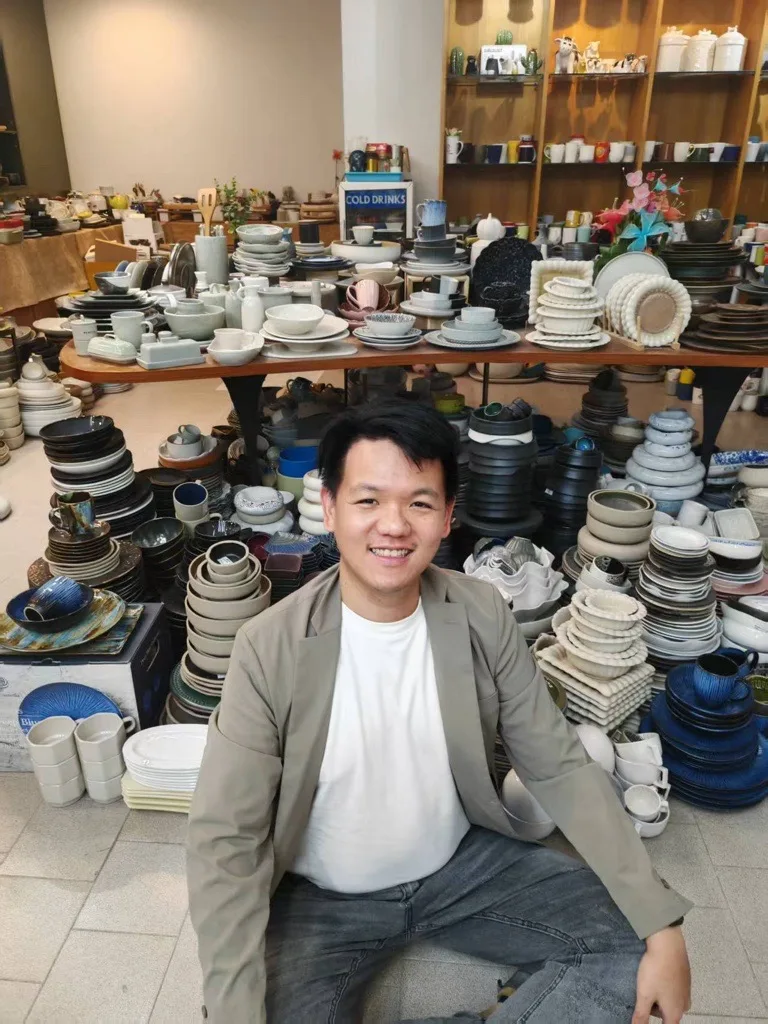
Jeffrey Chen is the second-generation CEO of Jason Craft Corporation, a Taipei-based sourcing and product development company founded in 1981. More about Jeffrey · About Jason Craft.